

Identifying Hidden Profit Leakage in Retail Deductions
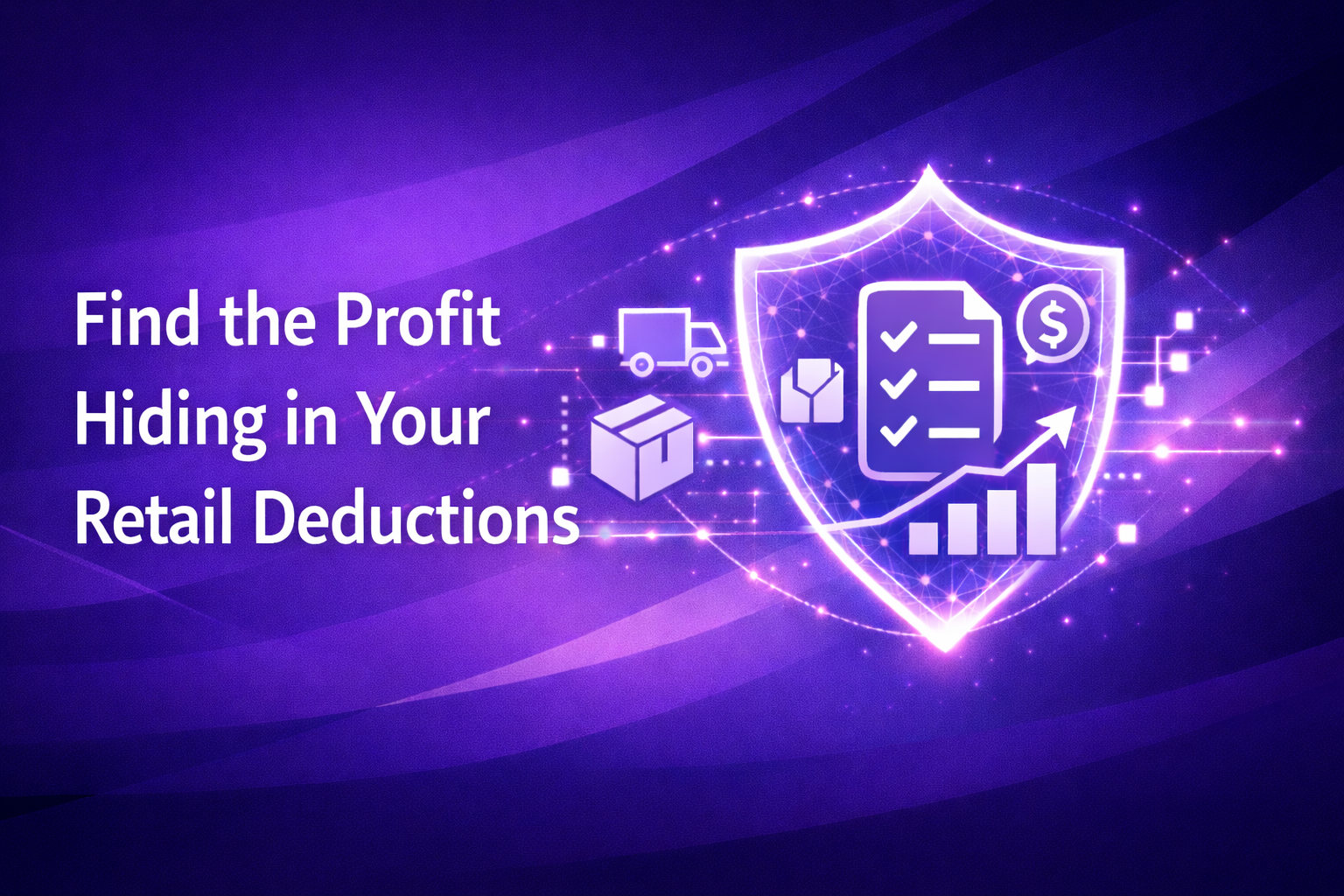
Retail deductions drain working capital for CPG companies. Learn how QAI uncovers profit leakage and helps finance teams protect margins.
- NLQ is rapidly maturing and attracting heavy investment, moving beyond simple queries into visualization, anomaly detection, and recommendation systems.
- Healthcare, finance, and customer service teams are using NLQ to surface patterns in patient data, detect fraud, and automate customer responses at scale.
- NLQ is reshaping application design and the workplace by making software more accessible and giving non-technical users a natural way to query data.
- Education and policy making both benefit — from personalized learning feedback to analyzing socio-economic data for more informed decisions.
Retail deductions and chargebacks represent one of the most persistent sources of profit leakage for CPG manufacturers. When retailers issue deductions—whether due to compliance issues, shortages, or shipping discrepancies—they simply reduce the payment on the invoice, leaving the supplier to determine why revenue disappeared.
For many organizations, this creates a hidden drain on working capital. Deductions accumulate across retailers, and the process required to reconcile and dispute them is highly manual. Accounts Receivable teams often spend significant time searching for documentation and coordinating across departments just to determine whether a deduction is valid.
QuaerisAI helps finance teams move from reactive reconciliation to proactive profit protection.
By analyzing deduction data alongside operational supply-chain signals, you can surface the underlying causes of revenue leakage and quantifies the financial impact.
This allows leadership to:
- Identify systemic failure points across the supply chain
- Measure the ROI of operational improvements and capital investments
- Prioritize initiatives that directly reduce margin erosion
A major barrier to successful dispute resolution is documentation availability. Evidence such as Bills of Lading, shipping confirmations, and transportation records are often stored in siloed systems across AR, logistics, and warehouse teams. In many cases they exist only as PDFs or spreadsheets that are difficult to locate within the dispute window.
QuaerisAI's document intelligence capabilities allow teams to quickly locate and validate critical shipment documentation, including verifying signatures and delivery confirmations. A signed bill of lading, for example, is often the key evidence required to challenge a shipping-related deduction.
Beyond dispute resolution, you can unlock a deeper level of true product profitability analysis.
Most CPG organizations track item performance based on revenue and trade spend, but rarely incorporate the full impact of deductions, compliance fines, post-audit recoveries, returns, and operational penalties. By unifying financial and operational data, QAI enables organizations to understand true SKU-level profitability after supply-chain costs and deductions are applied.
The result is improved financial visibility, stronger working-capital management, and the ability to systematically reduce profit leakage across the organization.
Organizations that treat deductions purely as an accounting issue will always remain stuck in a cycle of reconciliation and disputes. By connecting financial outcomes to the operational events that created them, companies can finally address the root causes of margin erosion—and turn deduction management from a reactive task into a strategic advantage.
Continue reading
View all posts →
How Decision Velocity Becomes a Competitive Advantage
Decision velocity is the new edge. See how rising flow signals translate into market wins.
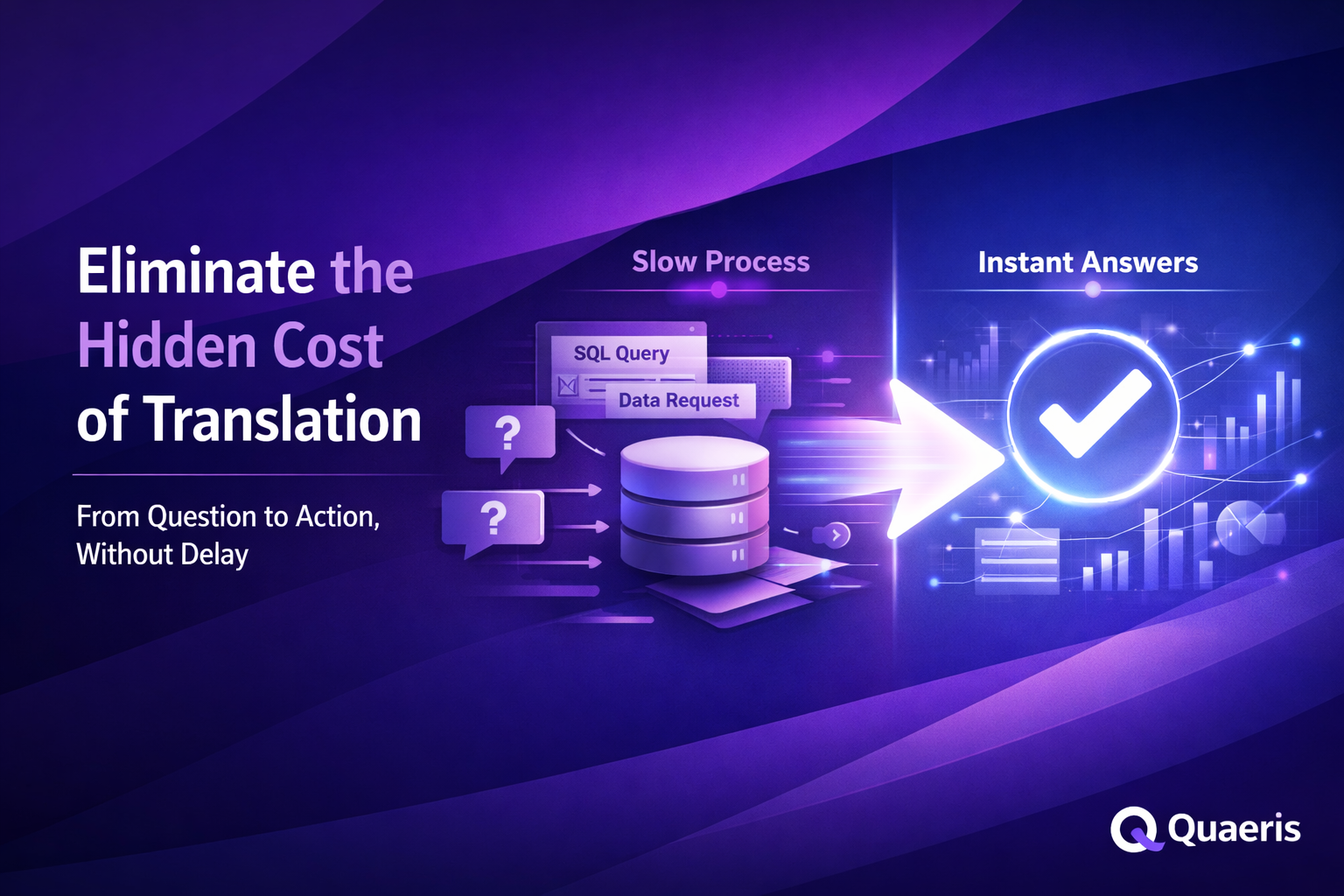
The Hidden Cost of Translating Business Questions into Queries
Every translation step from question to query introduces drag. Remove it with conversational data access.
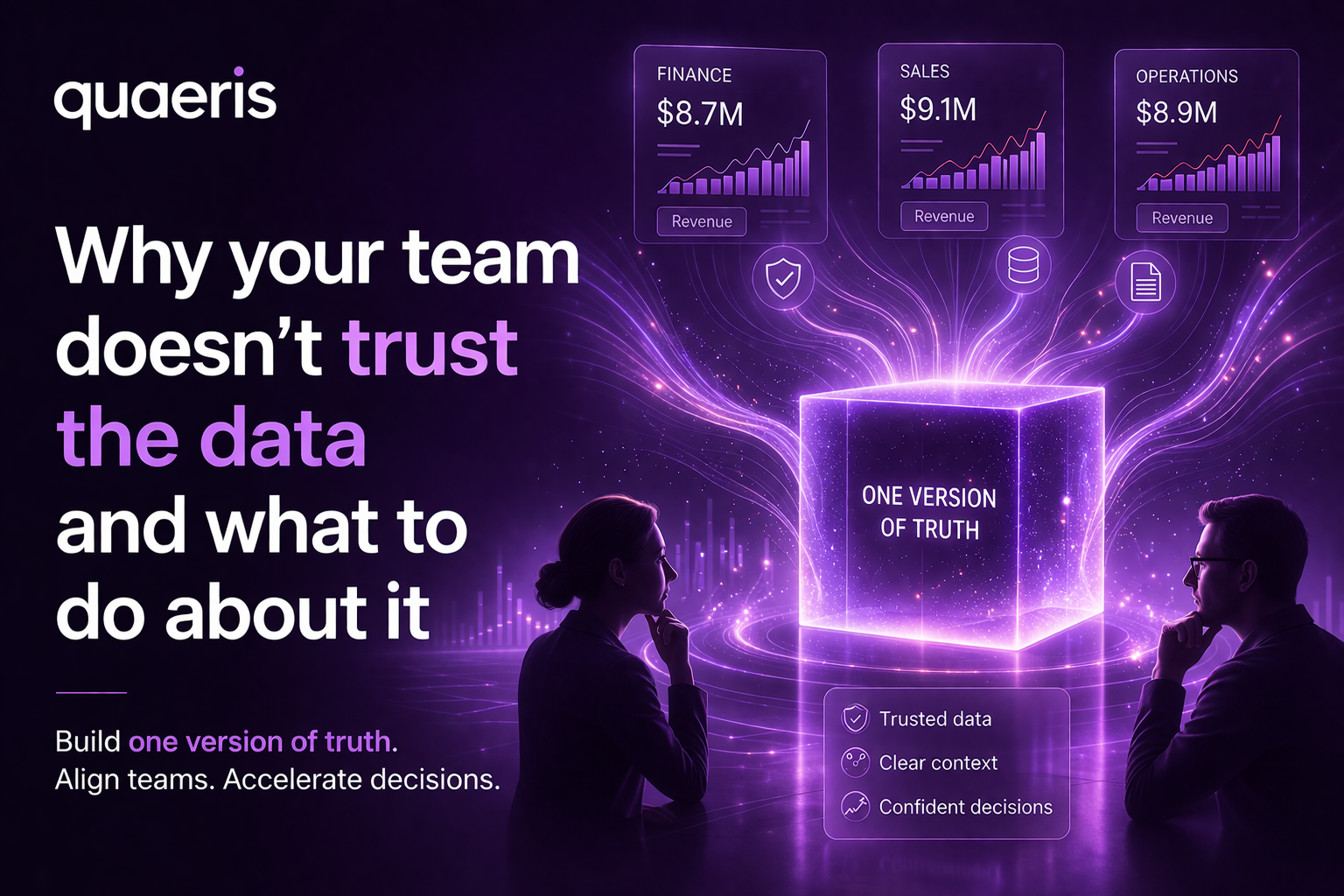
Why teams don't trust the data — and what to do about it
Trust is the missing ingredient in most analytics stacks. Here's how to rebuild it across teams.
Ready to see it in action?
Book a 30-minute demo and get answers from your own data — live.
Clarity that moves work forward.