
Modern governance should enable speed, not block it. Learn how controlled access builds trust and accelerates decisions across ERP and HRIS systems.
Too often, it is seen as the reason teams wait.
The reason access is denied.
The reason decisions slow down.
This framing is outdated.
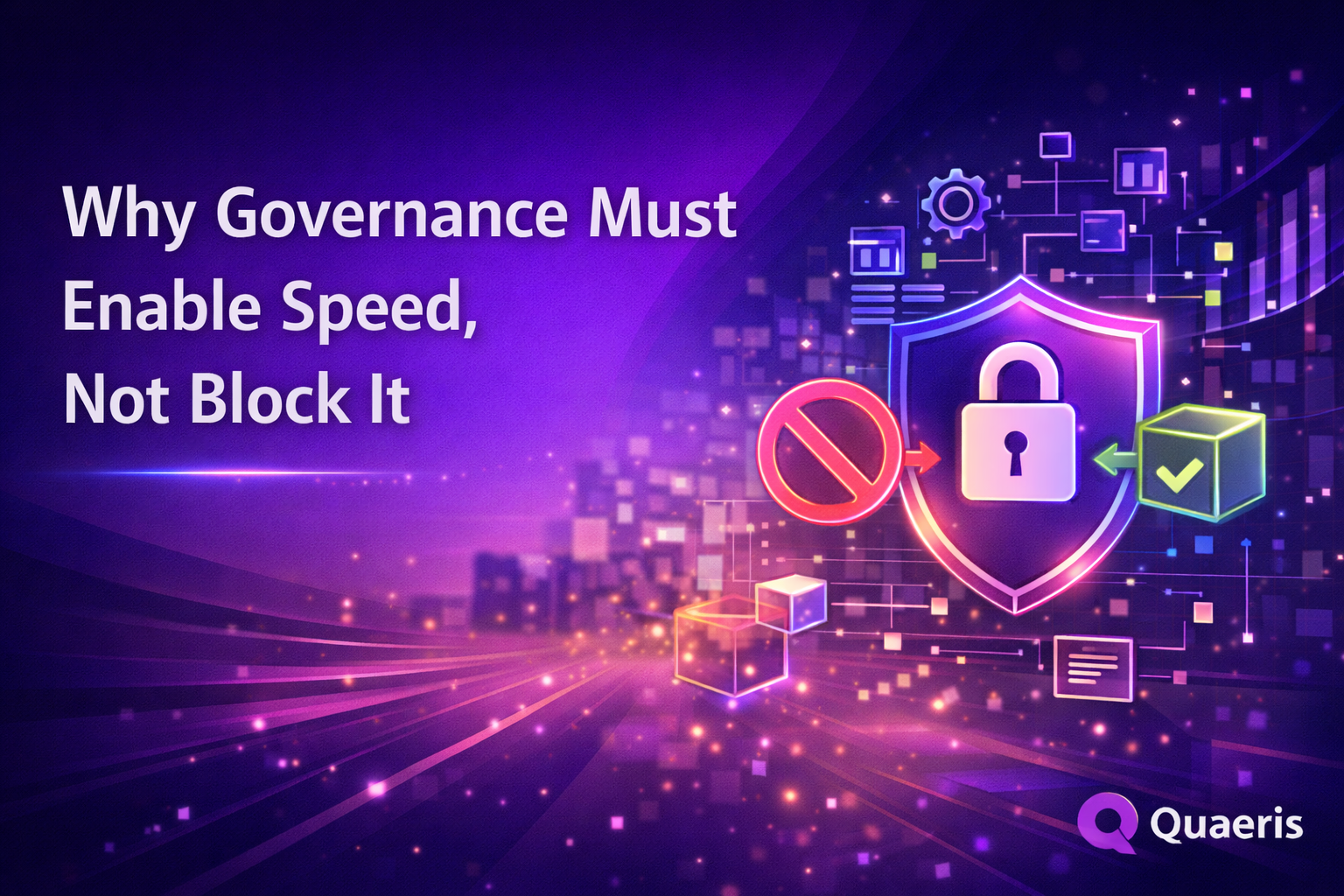
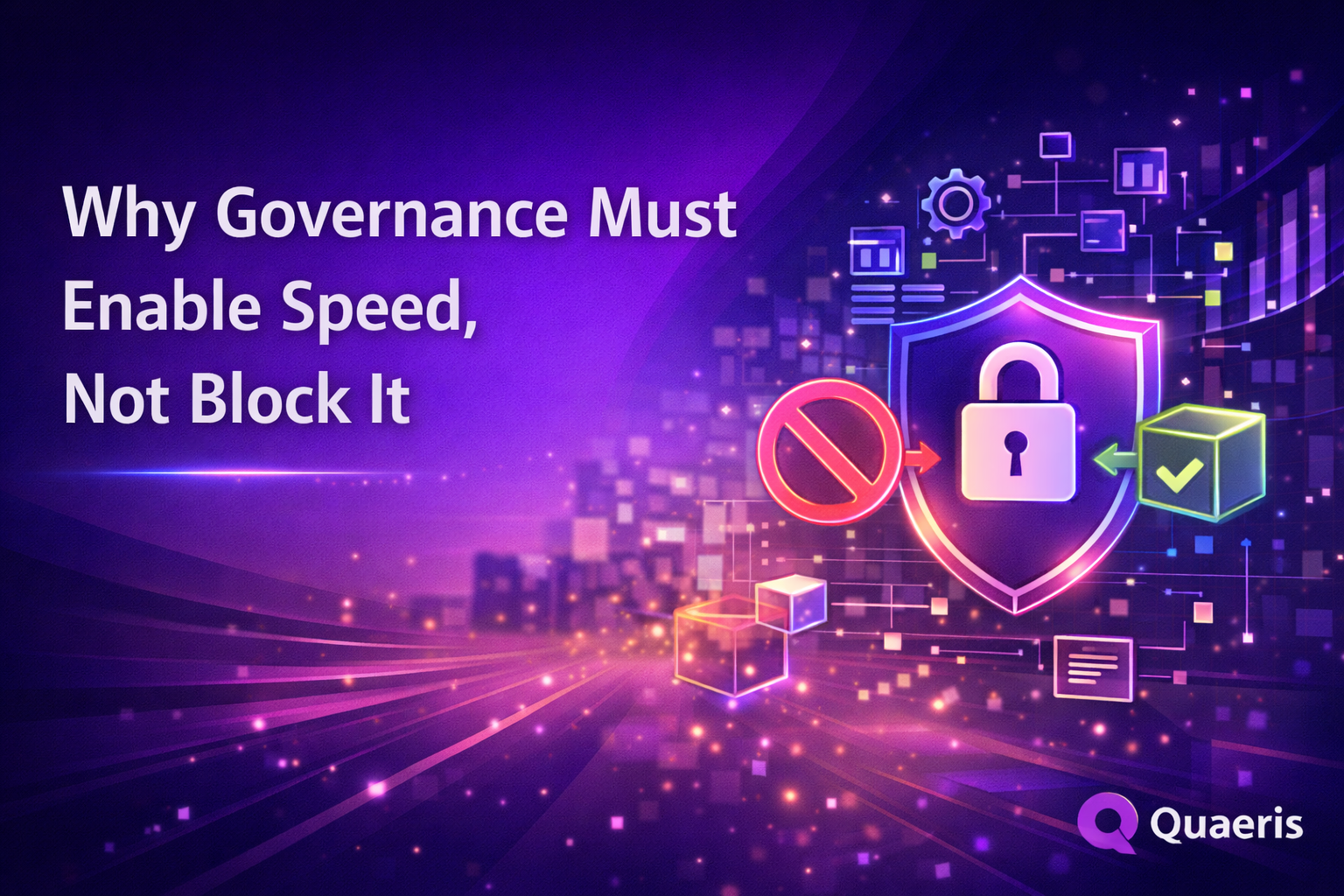
Modern governance is not about restriction. It is about trust at speed.
For CIOs, security leaders, and data leaders, the real question has shifted.
How do we enable broader access without increasing risk.
The Access Paradox in Enterprise Systems
Enterprise platforms like ERP and HRIS systems sit at the center of the business.
They hold employee data.
Compensation details.
Benefits records.
Financial transactions.
Systems like PeopleSoft, SAP, and modern HRIS platforms were designed for control. They were not designed for wide, fast, decision oriented access.
Yet business demands have changed.
Leaders want answers now.
Teams want autonomy.
Partners need visibility.
This creates an access paradox.
The more people who need insight, the greater the pressure to loosen controls. The looser the controls, the greater the risk.
Traditional governance struggles to resolve this tension.
Why Blocking Access Fails in Practice
When governance blocks access, behavior adapts.
Teams create workarounds.
Data is exported.
Spreadsheets circulate.
None of this is malicious. It is practical.
When people cannot get answers inside the system, they move outside it.
Ironically, restrictive governance often increases risk rather than reducing it.
Security teams know this pattern well.
The issue is not intent. It is architecture.
ERP and HRIS Are High Stakes Decision Systems
ERP and HRIS systems are no longer back office tools.
They inform decisions about:
• Hiring and attrition
• Compensation planning
• Overtime and labor cost
• Compliance and reporting
• Regional workforce strategy
These decisions happen daily. Sometimes hourly.
Waiting for reports or manual extracts is no longer acceptable.
Governance that slows these decisions becomes a business bottleneck.
The Traditional Fix and Its Cost
Historically, organizations solved access pressure by granting database access.
Analysts.
Contractors.
Offshore teams.
Each new credential was carefully scoped. Each one was audited. Each one was a risk.
This model does not scale.
Every direct connection expands the attack surface. Every credential adds complexity. Every permission structure becomes harder to review.
Security teams spend time managing access instead of managing risk.
This is where governance begins to feel like friction.
A Better Model: Controlled Access Through Abstraction
Modern governance works differently.
Instead of giving people access to systems, it gives them access to answers.
This distinction matters.
When users interact through a governed layer, several things change at once.
They no longer see raw tables.
They no longer write queries.
They no longer export sensitive fields.
They ask questions. The system enforces rules.
This is how governance enables speed.
ERP and HRIS Through a Decision Layer
Consider an HRIS or ERP environment.
A manager asks
What is turnover by department this quarter
They do not need salary records.
They do not need personal identifiers.
They need an answer they can trust.
A governed decision layer sits between the user and the system.
It understands roles.
It understands geography.
It understands policy.
Access is controlled without being obstructive.
Governance That Increases Adoption
When governance is embedded into the experience, adoption rises.
People trust the system because it gives them what they need without exposing what they should not see.
Security teams trust the system because:
• No direct database access is granted
• Sensitive fields are masked by default
• Queries are logged and auditable
• Policies are enforced consistently
This is not weaker governance.
It is stronger governance with less friction.
An ERP Example in Practice
Imagine a global organization with both ERP and HRIS platforms supporting multiple regions.
Offshore teams support operations.
HR leaders need workforce insight.
Finance needs labor cost visibility.
In a traditional model, access requests pile up. Security reviews slow things down. Exceptions are made.
In a governed decision model:
• Users ask questions in natural language
• The system translates intent into safe queries
• Data is filtered by role and region
• Results are aggregated and masked
• Every interaction is logged
No new credentials are created.
No sensitive data is exposed.
Decisions move faster. Risk goes down.
Audit and Compliance Improve as a Side Effect
One of the quiet benefits of modern governance is visibility.
Every question asked.
Every dataset touched.
Every rule applied.
This creates a living audit trail.
Instead of reviewing who might have accessed data, teams see exactly how data was used.
Compliance becomes simpler. Investigations become faster. Confidence improves.
HRIS Governance Without Fear
HR data is among the most sensitive in the enterprise.
This is where fear based governance often takes hold.
Lock everything down.
Limit access to a few specialists.
Force manual processes.
The result is slower workforce decisions and frustrated leaders.
A governed decision layer allows HR teams to share insight safely.
Trends without identities.
Aggregates without exposure.
Answers without raw access.
This enables better people decisions without compromising privacy.
Governance as a Trust System
The purpose of governance is not to say no.
It is to create trust at scale.
Trust that data is accurate.
Trust that access is appropriate.
Trust that usage is visible.
When trust is built into the system, speed follows naturally.
People do not need to ask permission.
They do not need to create copies.
They do not need to bypass controls.
They move forward with confidence.
How Quaeris Fits This Shift
At Quaeris, we approach governance as an enabler, not a gate.
We work on top of ERP and HRIS systems, not around them.
We do not replace security models. We enforce them.
By translating questions into governed actions, we turn managed systems into decision ready platforms.
The data stays where it is.
The rules stay intact.
The business moves faster.
This is how governance becomes a competitive advantage.
A Modern View of Control
Control does not mean limitation.
It means clarity.
Who can see what.
Why they can see it.
When they used it.
When these answers are clear, governance stops being a blocker.
It becomes the reason speed is possible.
The Real Takeaway
Governance should not slow the business down.
It should make safe speed possible.
In a world of ERP and HRIS driven decisions, the organizations that win are not the ones with the tightest locks.
They are the ones with the smartest doors.
Governance that creates trust does not block action.
It enables it.